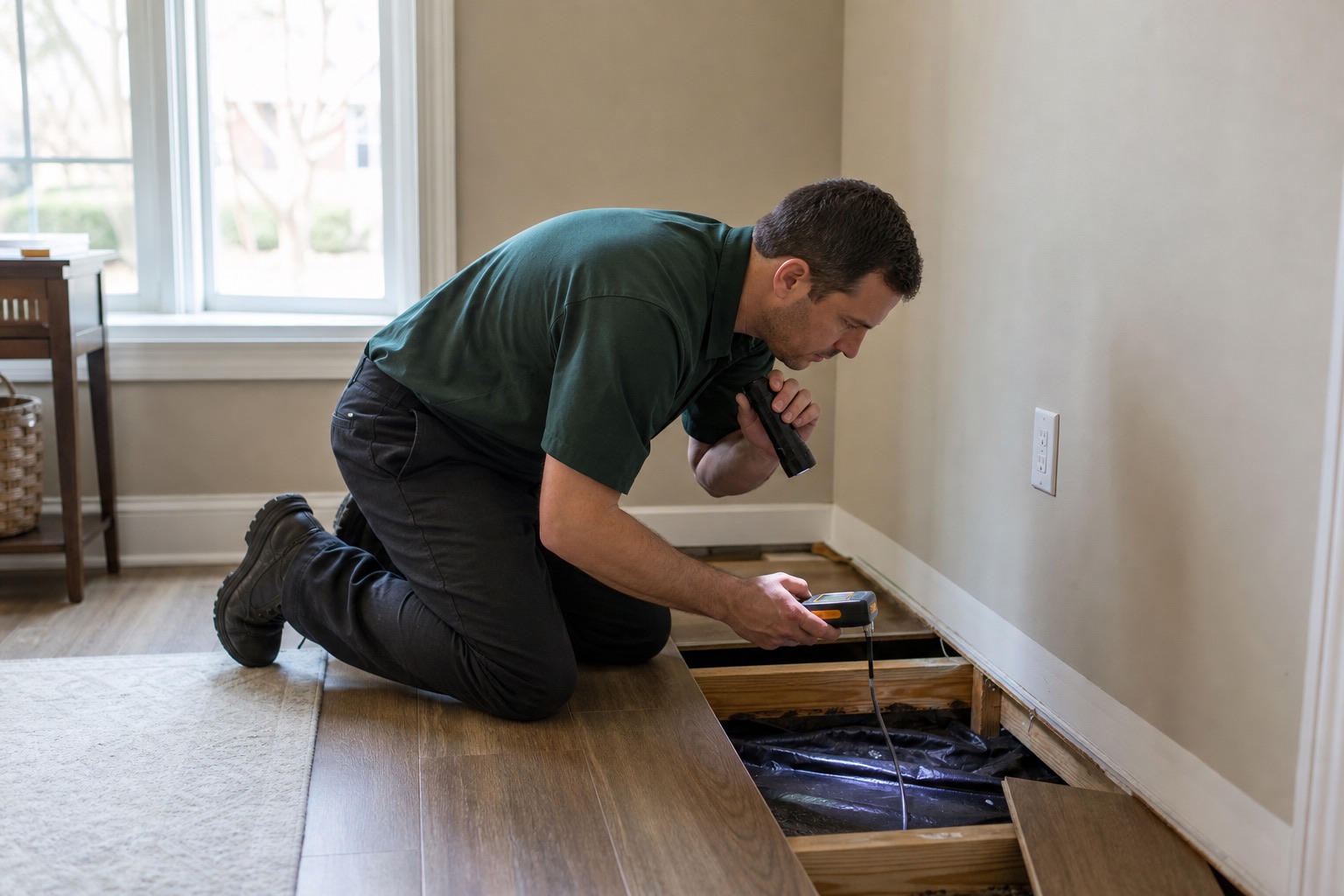
Raleigh mold remediation guide for property owners
A direct, plain-language sequence for turning visible growth, staining, odor, or a moisture history into better questions and better next-step decisions.
Record where you see growth or staining, where you smell an odor, and when the condition first appeared.
2
Review the moisture history
Include plumbing, roof, drainage, humidity, condensation, appliance, or crawl-space concerns.
3
Avoid spreading material
Do not aggressively disturb an uncertain area before the work boundary and appropriate precautions are understood.
4
Define the affected materials
Drywall, trim, flooring, cabinets, insulation, and structural materials can require different decisions.
5
Discuss containment and removal
The approach should fit the property, the material, the affected area, and planned work.
6
Plan drying, cleanup, and repairs
These are connected decisions, but they do not automatically happen in one step.
Raleigh service context
A practical mold-remediation reference for Raleigh
Describe the building
Share whether the affected space is a home, apartment, rental, office, or retail interior and where it sits in the building.
Describe the moisture history
Raleigh callers may mention hidden leaks, humid air, moisture beneath flooring, and damp crawl-space conditions. Explain what changed and whether the source is understood.
Describe the affected area
Include flooring edges, wall bases, cabinets, closets, crawl spaces, adjoining rooms, and any other place where conditions changed.
A hidden leak can change conditions below flooring, behind a cabinet, or along a wall base before the full pattern is obvious. Raleigh Mold Remediation Pros helps callers organize what they see, what they smell, what changed recently, and which areas may need evaluation.